19Mar

דוח מבקר המדינה 2026 חושף כיצד קריסת מנגנון השוק בזמן מלחמה מערערת את מושג השווי. ניתוח מקצועי שמחבר בין נזקי מלחמה לבין עיוותים עמוקים בשוק הנדל"ן.


דוח מבקר המדינה (2026) חושף את הכשל העמוק בהערכת נכסים בישראל


פתיחה

דוח מבקר המדינה שפורסם בינואר 2026 על היערכות רשות המיסים לפיצוי בגין נזקי מלחמה, אינו רק ביקורת אדמיניסטרטיבית. זהו מסמך יסוד שממחיש, בצורה חדה וכמעט אכזרית, מה קורה למושג "שווי" כאשר מנגנון השוק מפסיק לפעול. 

והמסקנה ברורה:

כאשר מנגנון היווצרות המחיר אינו פועל – גם מושג השווי קורס.


1. פרדוקס השווי: חוק מדויק – מציאות בלתי אפשרית

המסגרת החוקית ברורה:

  • פיצוי בגין נזק ישיר משולם לפי הנזק הממשי
  • כלומר: ההפרש בין שווי הנכס לפני ואחרי הפגיעה

אך במציאות של מלחמה:

  • אין עסקאות
  • אין שוק פעיל
  • אין קונה ומוכר מרצון

ולכן – אין "שווי שוק" במובן הקלאסי.המערכת דורשת מדידה –

אך פועלת בתוך ואקום.


2. הנתונים: אירוע קצה שמפרק את הכלים המקצועיים

היקף האירוע מדבר בעד עצמו:

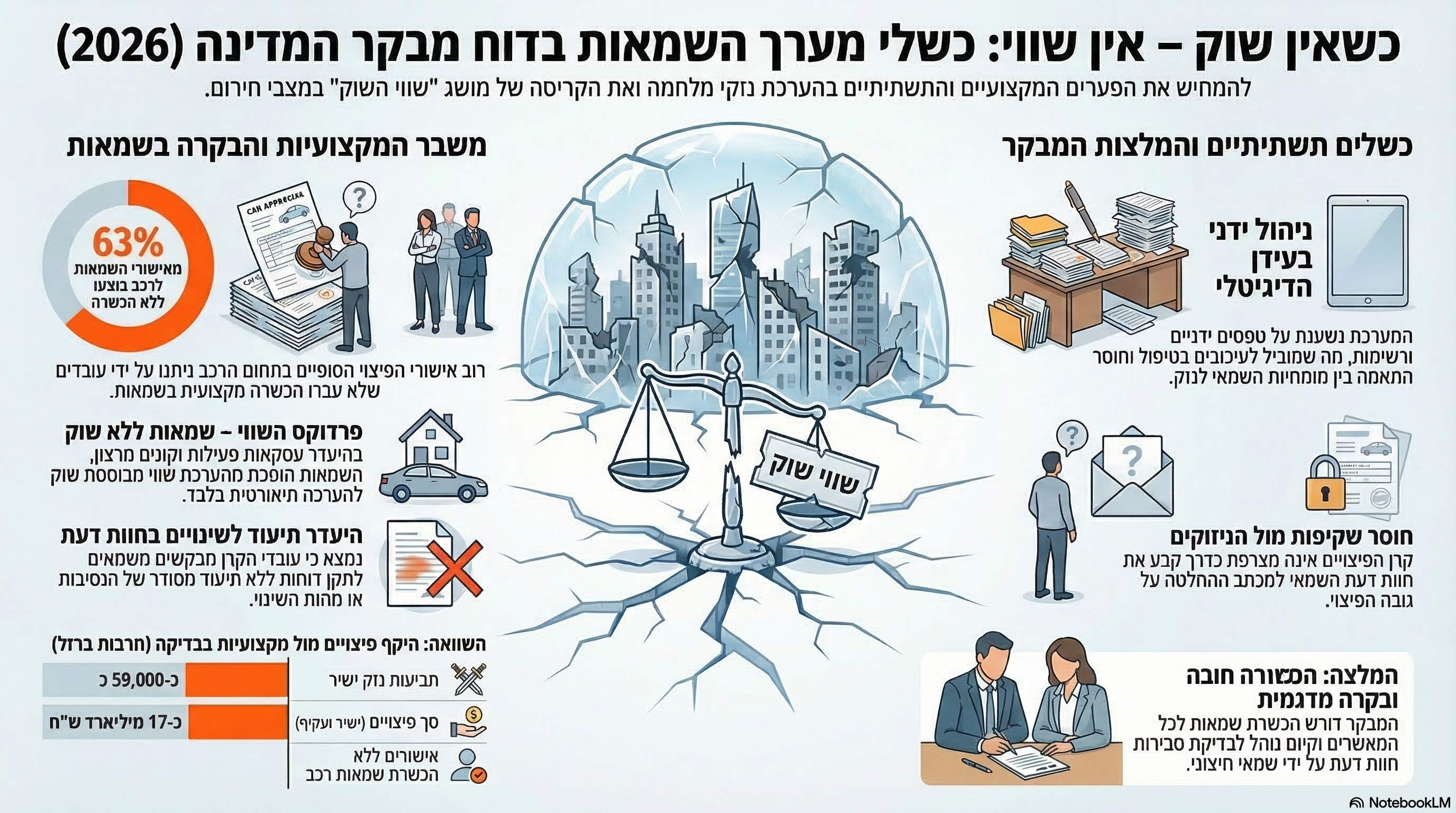
  • כ־59,000 תביעות לנזק ישיר
  • כ־1.9 מיליארד ש"ח פיצויים לנזק ישיר
  • כ־17 מיליארד ש"ח פיצויים כוללים

זה אינו אירוע נקודתי.

זהו מבחן עומס למערכת השמאית והכלכלית של המדינה.


3. מיליארדים ללא מערכת: כשל תשתיתי

אחד הממצאים החריפים בדוח:

  • אין מערכת שליטה ובקרה מלאה
  • ניהול מבוסס רשימות ידניות
  • טפסים ידניים בשטח
  • עיכוב של שנים בפיתוח מערכת ייעודית

התוצאה:👉 עיכובים בטיפול

👉 חוסר התאמה בין שמאים לסוגי נזק

👉 תלות בידע אישי ולא במערכתהמבקר קובע כי מצב זה פוגע במהירות וביעילות הטיפול בניזוקים


4. כשל ארגוני: מערכת ללא שליטה

עובדי קרן הפיצויים פועלים במבנה חריג:

  • כפיפות מקצועית לקרן
  • כפיפות מנהלית ליחידות אחרות

התוצאה בפועל:

  • הוראות סותרות
  • חוסר גמישות
  • פגיעה בתפקוד בשעת חירום

זהו לא כשל נקודתי –

זהו כשל מבני.


5. השמאי בשטח: בין מקצוע להישרדות

הדוח מתאר מצב שבו:

  • צוותים מגיעים לאתרי נזק גם ללא פנייה
  • לעיתים ללא מידע מוקדם
  • ולעיתים ללא התאמה מיטבית בין מומחיות הנזק למטפל

במצב כזה, השמאי אינו פועל בתוך שוק –

אלא בתוך סביבה של אי־ודאות קיצונית.ולכן, בפועל:👉 זו אינה הערכת שווי שוק

👉 זו הערכת נזק תחת תנאי חירום


6. הכשל האמיתי: בלבול בין שווי למחיר

הדוח לא אומר זאת במפורש – אך זו המסקנה הבלתי נמנעת:כאשר:

  • אין שוק
  • אין עסקאות
  • אין נזילות

👉 לא ניתן להגדיר שווי שוק.ולכן:שווי אינו מספר – הוא תוצאה של מנגנון שוק.
וכשהמנגנון מושבת – השווי הופך להערכה בלבד.


7. ומה זה אומר על שוק הנדל"ן "הרגיל"?

כאן מגיע החלק הלא נוח.אם בזמן מלחמה ברור שאין שווי –

אז מה לגבי שוק שבו:

  • הנתונים חלקיים או מעוותים
  • העסקאות מושפעות ממבצעי מימון
  • המחירים אינם נגזרים מתשואה

האם שם באמת יש "שווי"?או שמדובר, גם שם, במערכת שמייצרת מחירים – אך לא ערך?


סיכום

דוח מבקר המדינה אינו רק ביקורת על רשות המיסים.

הוא תמרור אזהרה רחב בהרבה.הוא מלמד אותנו שלושה דברים:

  • שווי תלוי בקיומו של שוק אמיתי
  • דאטה חלקי מייצר הערכות – לא מדידות
  • מערכת ללא תשתית תומכת מייצרת טעויות בקנה מידה גדול

והמסקנה המקצועית ברורה:👉 שמאות שאינה מבוססת על מנגנון שוק תקין – אינה מודדת שווי, אלא מניחה אותו.


📦 English Summary:

When the price formation mechanism fails, value collapses with it.

Israel’s 2026 State Comptroller report on war damage compensation reveals a fundamental truth: without an active market, valuation becomes estimation. This insight challenges the reliability of real estate pricing even in seemingly “normal” markets.
16Jul

What is a property tax advance? When and how can it be received? What is the role of the property appraiser in the process, and what are his professional and appraiser duties? The post reviews in depth the mechanism of property tax advances, the appraiser's responsibility to minimize damage, the obligation to proactively offer an advance, the requirement to release a lien from a bank in mortgage cases - and also includes a sample form. A must-have guide for every property appraiser, injured party and professional in the field of war damage.

דרישת מקדמה ממס רכוש: אחריות השמאי והיבטים שמאיים חיוניים


רקע: מהי מקדמה ולמה היא נועדה?

כאשר נכס ניזוק בשל פעולת מלחמה, ירי רקטות או פיגוע, עומדת לבעליו הזכות לקבל פיצוי לפי חוק מס רכוש וקרן פיצויים. אחד הכלים המרכזיים שמסייעים בשלב הראשוני הוא מנגנון המקדמה – תשלום חלקי מתוך הפיצוי העתידי, שנועד לאפשר שיקום מיידי והקטנת נזק והפסד כלכלי.

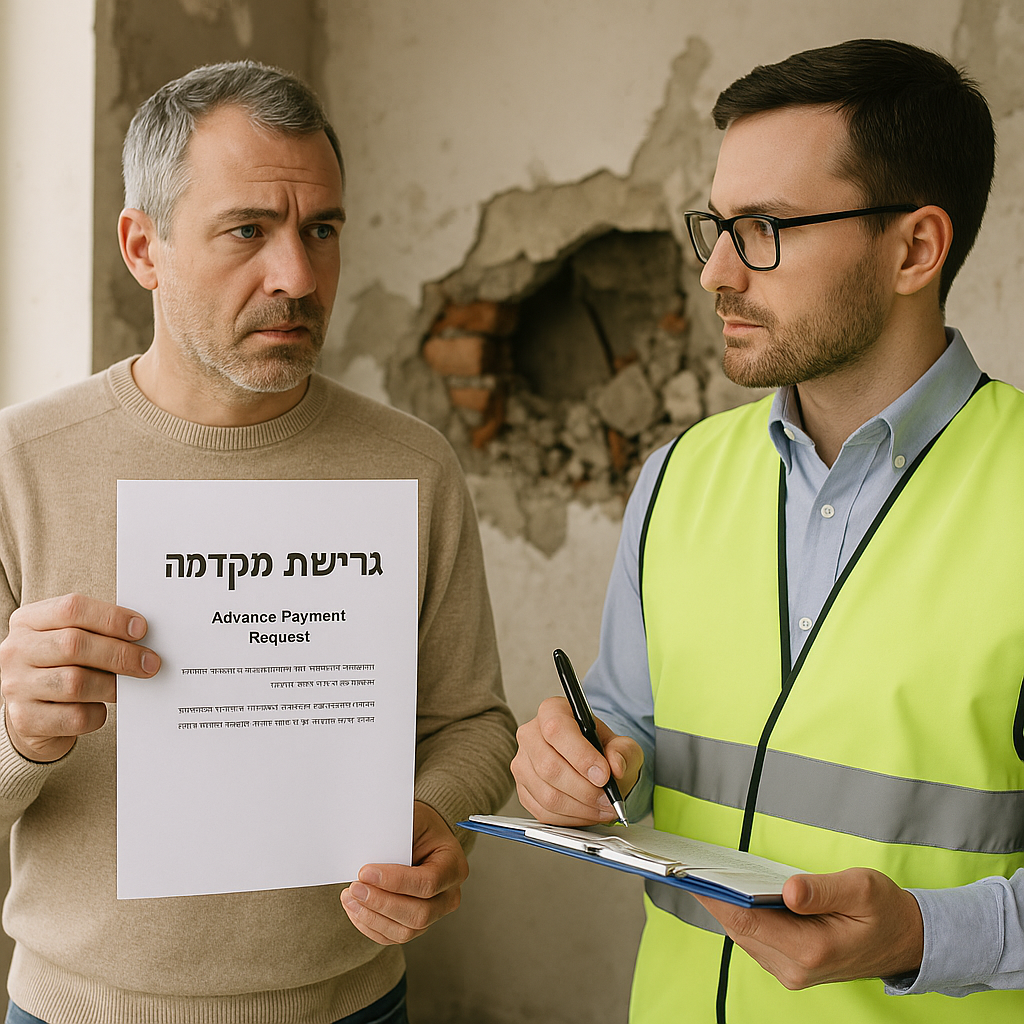
המקדמה ניתנת רק לאחר הערכת נזק ראשונית של השמאי – ובכפוף למגבלות רגולטוריות וחוזיות – כאשר לשמאי הרכוש תפקיד מקצועי, משפטי ואנושי מכריע. עם זאת, חשוב להבין כי גם לניזוק יש אחריות: עליו לדרוש את המקדמה. רבים מהניזוקים כלל אינם מודעים לזכותם זו, ולכן חלה על השמאי החובה להציע באופן יזום את האפשרות לקבל מקדמה, כדי לאפשר לניזוק לנקוט בפעולות מידיות לצמצום נזקיו ולמניעת החרפתם.

מקובל ששיעור המקדמה יהיה לא פחות ממחצית הערכת הנזק והאומדן הראשוני.


צמצום והקטנת הנזק - לא רק לנתבע אלא גם לניזוק עצמו - זו חובה שמאית מקצועית ובאחריותו!

תפקיד השמאי – הרבה מעבר להערכת נזק

• בחינת הנזק בשטח תוך התרשמות ממידת הפגיעה הפיזית והתפקודית של הנכס• הערכת ההשפעה הראשונית והמלצה על גובה מקדמה בהתאם לשיקול דעת מקצועי ומתועד• ייזום פעולות להפחתת והקטנת הנזק: המלצה על תיקון זמני, מניעת החמרה, הכוונה לשוכרי משנה, ושמירה על יציבות תפעולית• הבהרה לניזוק שהמקדמה היא לא רק סעד כספי זמני, אלא אמצעי מהותי לשיקום ערכי, תפקודי ולצמצום הנזקים שלו ושל המדינה


אחריות חוזית, מקצועית ומשפטית

• שמאי רכוש הפועלים מול מס רכוש במסגרת התקשרויות חוזיות מחויבים להחזיק בפוליסת אחריות מקצועית תקפה כתנאי סף למתן השירותים• חלה עליהם החובה לבצע אומדן מוקדם של הנזק, תוך עמידה בלוחות זמנים סבירים ומתועדים, ומתן המלצה מנומקת ומיידית ככל שניתן• כל עיכוב או התרשלות מצד השמאי שעלול לגרום לנזק כלכלי לניזוק וכלפי מס רכוש, ולכן הוא נושא באחריות מקצועית דו-צדדית: כלפי המדינה וכלפי האזרח.


מגבלת השעבוד – מה עושים כשיש משכנתא?

כאשר קיים שעבוד על הנכס (לרוב בצורת משכנתא פעילה), לא ניתן לשחרר כספי פיצויים לניזוק שנכסו משועבד עד אשר תתקבל הסכמת הבנק לשחרור השעבוד. מדובר במגבלה משפטית טכנית אך חיונית, שכן כספי הפיצוי עשויים להיתפס כחלק מהבטוחה של הבנק.

על הניזוק לבצע את הפעולות הבאות:

  • לפנות לבנק ולבקש אישור לשחרור השעבוד ביחס לכספי הפיצויים
  • להעביר את האישור למס רכוש
  • ורק לאחר קבלת האישור, ניתן יהיה לשחרר את המקדמה

לרוב, מדובר בהליך טכני שאינו מורכב, אך חוסר מודעות אליו גורם לעיכובים מיותרים. שמאים צריכים ליידע את הניזוק כבר בתחילת הדרך בדבר הדרישה הזו.


"עברו שבועיים ללא תגובה": השמאים הפרטיים ששכרה המדינה לא עומדים בעומס

23Jun

When demolished buildings are rebuilt, the law requires adding a building permit – but who will pay? A pointed blog about the problem of forced rehabilitation after damage, and the call for the establishment of a dedicated government fund to solve it. When a state rebuilds demolished apartments – it is obligated to add a building permit. But who will finance the cost of the improvement? A pointed blog that illuminates the budgetary trap of reconstruction under a mandatory protection standard. When a state promises to rehabilitate demolished apartments, it demands that a building permit be included – but does not commit to financing it. This is the building permit trap, a legal distortion that jeopardizes the entire reconstruction process. The owners of the apartments whose homes were demolished hope for reconstruction through evacuation and construction, but the banks' strict requirements for early sale make the dream unfeasible. Without government intervention – the projects will stall, and the destruction will remain. The demolished buildings will not be rebuilt without an emergency financing formula. The demand for early sales is stifling the possibility of evacuation-reconstruction projects. The state must intervene and build a new rehabilitation model.


Compulsory medical treatment – ​​but who will pay?

The demolished buildings: between hope for renewal and a financing trap

In the midst of a period in which rocket barrages have become routine, many of the buildings that were damaged throughout Israel – especially in old areas – have been or will be demolished. Some were built in the 1960s and 1970s, without a standard protected space (MPS), and the apartment owners look to their future in the hope of an evacuation-and-build project or government assistance that will restore their roof over their heads. But there is a fundamental problem that the state has yet to provide a real solution to: building new apartments requires an additional MPS – and this involves a high cost. This is a legal requirement – ​​not a permit – so even when the state participates or the developer is willing to build, the cost of building the MPS falls between the chairs.


The heavy cost of a mandatory upgrade

A building that is demolished and rebuilt according to the 2025 regulations requires the construction of a drywall in each apartment – ​​even if there was none before. But drywall is not drywall – it costs 100–200 thousand NIS per unit , depending on the specifications, area, floor, and quality. So who is supposed to pay for it?

  • The state? Has not yet committed.
  • The developer? Only if the project is financially viable – which doesn't happen in a market saturated with unsold apartments and declining yields.
  • The apartment owner? Why should he pay for the "improvement" that was forced upon him after a disaster?

Reclamation ≠ Compensation: On the one hand, a roof, on the other, an expensive obligation

The requirement for a municipal building creates a paradox: the new apartment is upgraded and protected – but the improvement is forced on the injured party . In a normal case, such an addition is considered a "privilege". Here, it is a regulatory requirement, which makes compensation problematic:

How can you talk about "rehabilitation value" if you are not getting an apartment back with matching specifications but are required to "finance the upgrade"?

Call for an immediate solution: a dedicated fund to finance battalions

In the current security reality – and one that is expected to worsen – the state must establish a dedicated funding fund to fully finance the construction of shelters in reconstruction projects after war damage. Whether through property tax, the Ministry of Defense, or the Ministry of Housing – it is not the role of the family that was rescued from a missile – to finance its next defense.


Bottom line: Without funding for the MMAD – there is no real rehabilitation

Urban renewal after damage is a necessary step, but without a clear solution to the issue of the construction sites – any promise of evacuation-construction or a rehabilitation TAMA will collapse in the face of critical funding constra

14Jun

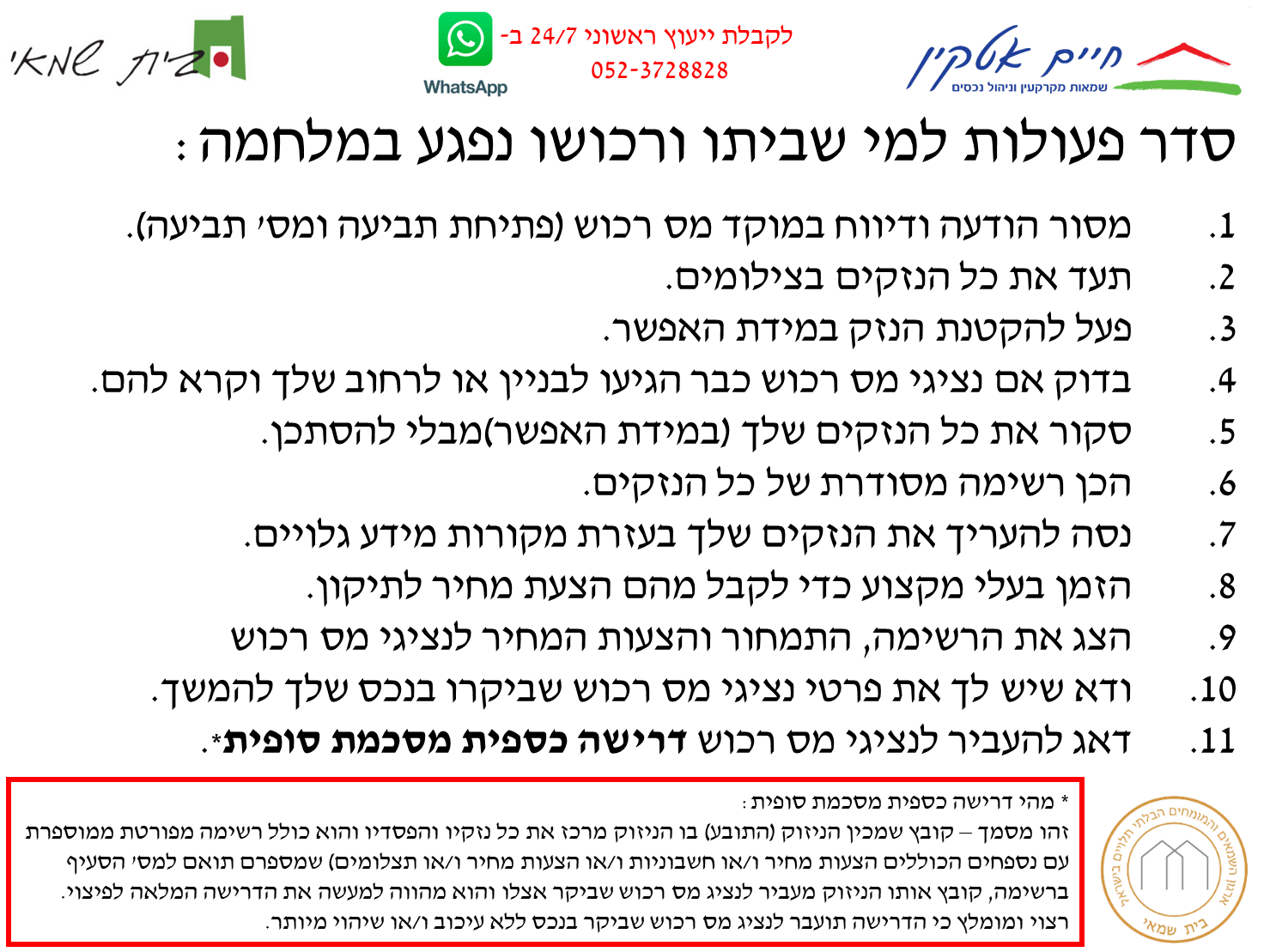
Has your property been damaged due to hostilities or war? A professional and up-to-date guide from a trusted source explains step-by-step how to receive property tax compensation – including forms, conditions, appraisals, and direct links.

A professional, clear and practical guide for those whose property was damaged as a result of war damage and hostilities, and who wish to exercise their entitlement under the Tax Authority's compensation fund (Property Tax and Compensation Fund Division) , which operates under the Property Tax and Compensation Fund Law, 1961.